bookstores, coworkers, librarians, talking

(That) Kind of A Manager

My current position is not perfect. However, in the interest of complaining less (which is good for you!) and focusing on positivity instead of negativity, I thought I would address my favorite part of my job, as well as celebrating some quality people who have shaped who I am in the workplace.

I supervise student employees. They are mine to boss around — er, I mean, assign/delegate tasks — though I do not schedule them or serve as their go-to contact. I am there to answer their questions, back them up with patron-related problems, and I ask them for help with tasks. They (mostly) oblige good-naturedly. Building relationships with young people has always been one of my favorites, and it influenced my choice to major in Education, to pursue student teaching a second time despite a disastrous first try, to nanny, and to work as a teacher-librarian. Of course, my college students are very different than the toddlers I used to babysit (namely in their affinity for curse words and their showing up with visible “love bites”), but deep down I just like being around people and often younger people are more open to talking and connecting with someone they don’t know well.

I loved training the newbies: showing them the ropes and fielding their questions when new situations pop up. One student at the beginning of the year was so stunned at how old some of our materials are because they had been published the same year his grandma had been born. It was sweet to see his awe at how the information within had existed as long as his grandma, and to see him think about how the book’s field of study had likely changed.

Even more than the work-related conversations, I love hearing them talk about what’s going on in their real lives: work, school, family. I love urging them, seniors or otherwise, to seek out resources that the University offers that they either don’t know about or have the motivation to utilize (here’s looking at you, Career Services :). I love listening to the Sunday girls speak in Spanglish with each other and get excited that I can understand roughly 75%. I am impressed when other students speak in fluent Hindi because it sounds so complicated, but they, bilingual, have been using it since birth. They are pre-med, nursing, engineering, or bio majors and I know I never had to study that hard in college (high school, maybe).

Whereas some students keep entirely to themselves, glued to their laptops or phones their whole shifts, the students who talk to me are my favorites. They tell me about their roommates wanting the heat up way too high, their conferences in Pittsburgh (the buildings are all brick–too much of the same color!), their public speaking assignments, faraway summer internships they’ve lined up (rent is insanely high in CA! Owning real estate and letting money roll in is such a goal!), their minors–majors stress them out, but their minors are fun passion projects like theatre, which involves set building/design and props in particular, creativity in general. The kids have wild stories — one girl humbly told me her family store was robbed over the summer, that she and her dad were held at gunpoint. She smiled and said “it was scary” but that the police caught the perpetrator shortly afterward, and did not appear shaken in the least.

And last week, during my last hour of work before a pre-announced snow day, I asked the young adults working what they were doing on their day off, and they asked me the same. My plan was to watch Coco, and hearing that, one student LIT UP. She is not one of my warm-and-fuzzy students, but she could not stop smiling about my watching it. This 20-year-old told me about how she loves the soundtrack and listens to it sometimes, and she warned me I would cry. (She was completely right.) The four of us then had a fifteen-minute conversation about “kid” movies, babysitting and its merits, and I shared my lone horror story from the single time I ever accepted a job substitute teaching kindergarten. (ONCE WAS ENOUGH. Props to all the kindergarten teachers.) I left for home that night happy for the day off, but happier to share so much dialogue, such a connection with someone young enough that I could have babysat over a movie I hadn’t even watched yet.

[THEN I watched it, and holy moly, I cannot recommend it enough. Seriously, so beautiful. Stop everything and go request it from the library. I’ll wait here!

…Great, glad you took care of that. You too will soon be able to share in the magic.]

More than anything, though, I was happy that I get to be kind of, sort of a manager, because I get to work with some cool young people. I’m that kind of manager: real with them. I go easy on them when they are cramming for an upcoming exam. I ask them questions about their family trips to visit relatives in Colombia, and I pack and label the outgoing mail alongside them because they don’t like doing it (but I do!). I try to calm their course-related anxiety and encourage them to get enough sleep every chance I get.

The best managers I’ve had have been calm, kind and available. One such person is one of the nicest people I’ve ever known, whom I watched many a customer verbally abuse at the bookstore, for any number of reasons (probably related to coupons and their applicability). Through it all, no matter how rude someone was to him, he did not take it personally, nor get nasty in response. Instead, he calmly tried to reach an acceptable solution for the customer. I never saw his hair on fire (metaphorically or literally)–even though he was the manager in charge of the schedule, he maintained one of the most easygoing, goofy attitudes complete with a smile. Working with him was relaxed and productive. When I was dumped by my first love and someone in the store tried to immediately set me up with her brother, I fled to the staff room and cried hysterically to this man until he got me laughing and ready to face the floor (if not the dating scene) again. His wife, son and daughter are lucky humans! He still texts me to check in on my birthday & remains part of my support network when it comes time to apply for new jobs. Though I never observed him outwardly showing discontent, eventually, he wanted a better schedule/higher pay, and probably a job where no one screams at him, so he no longer works in retail. But when he was in it, he was the best at accommodating schedule requests and just overall being a great guy. J, you rock!

While I was awed by J’s (and almost all of my bookstore family’s) ability to remain calm under attack, I had to experience discipline from the master some years later. My supervisor in my grad school position was professional in ways I had never known. This was the first workplace other than nannying where the roster of day-to-day contacts stayed consistent. Blessed with the privilege of a non-public workplace, this woman showed me the power of introverts. Her quiet in meetings did not signal a lack of engagement, nor lack of opinion, but she chose when, how, and to whom to express herself in a deliberate matter that best served the purposes of the team. Considering that I am often physically unable to withhold my opinions, seeing her at work was enlightening and provided me with a model for how to comport myself diplomatically in a work environment. She trusted me with projects, some from the ground up (and to only minor, occasional disappointment) and to select candidates to interview for her future graduate assistants. A private person in many ways different from myself, she and I nevertheless bonded over projects, laughs and a mutual appreciation for handwritten letters. During my time working for her, we both suffered losses: she, her beloved father and I, a significant relationship. Rather than the awkwardness that can pollute the workplace post-sad event, we took care of each other. Our respective vulnerabilities did not derail work, and we gently built each other up, one poke-of-my-head-through-her-door at a time. TT, you taught me that it is not weak to take care of yourself, that an office can be a family, and that balance between work and family is possible without sacrificing dedication to either! You serve as my benchmark for how I should carry myself at work. You rule, lady! I hope this makes it into your smile file 🙂

It is strange to me that the people with whom you spend 8+ hours each day are not your chosen inner circle of friends and family. They are a bunch of randos, and today I’m thankful for my time with these two pleasant people, a lifesaver of a current colleague (seriously, H! Mister Rogers stamps!?! Such a thoughtful gift) and my sweet students.

I’m lucky to have to be around the people I do.
empathy, information, kindness, librarians, strangers

The Ones Who Call

Answering the phone at work is one of my favorite activities. I already like talking on the phone, which is more than many people can say. However, when people call in to the public library (note: I did not say THEIR public library, since we get scores of calls from far, far away), there are good chances the encounter will be positive. This is because:

  1. The caller is likely to be older. Maybe they are physically restricted and can’t make it in, but gosh darn it, they are pleasant on the phone. All it takes is a sweet old lady calling me ‘dear’ and telling me I’ve been ‘so very helpful’ and I am struck with a good mood for at least two hours.
  2. Often, a mobile customer is asking a brief question, ie “are you open?” or “do you have [this book]/a color printer/paper federal tax forms?” and in a ten second interaction, I can provide a solution to their information need. One reason I’m a librarian is that I actively enjoy answering questions and sharing information.
  3. The library employee maintains a healthy amount of control in the event that a customer becomes demeaning or inappropriate. While this does not happen often, in person or on the phone, I treasure the ability to not have to endure verbal abuse for longer than it takes me to say, “sir/ma’am, if you continue to disrespect me like this, I will hang up.”
    • My wise and talented colleague taught me a librarian lesson (our version of life lessons) one day with a customer who wanted to babble with no perceived purpose. She told the man politely, “I’m sorry, I have a customer here and I need to hang up.” And then she did! It was crazy how simple it was to reclaim her time.

That said, phone interactions can go south in many ways. You never know who will call in. There is one frequent caller who asks for various conversions of inches to millimeters and for phone numbers to businesses in the United Kingdom. It is not her questions that rub me the wrong way, but her snappish, pushy tone, and the way she does not believe what I report to her. There are weeks where patients in psychiatric facilities call us and we have to encourage them to call priests or pastors because we cannot answer their questions about sin and forgiveness. There are teens who clearly have not used their cell phones for the purposes of communicating voice-to-voice with other human beings, and people who get angry at us because we can’t hear them due to their poor cell reception.

When I worked in Youth Services, we received many phone calls from one mother whose son visited the library for many hours each school night, and Saturdays, and Sundays. He did not have a cell phone, and she knew to find him there. She called once and asked for her son and when I said sure, I will go get him, she lashed into me. “Why do you know my kid?” The thing about librarians who work with kids is that we get to know them in a safe space: what they like, what they read and what magic makes them who they are. We care about them. This is what makes good youth librarians good at their jobs. I told her that I knew him because he was there every day, and she lost it. She screamed at me about how I was judging her for having to work and not being home with her child. She told me she was tired of us at the library and how if we thought her kid was there too much, she wouldn’t let him go there after school. In between saying that that was not necessary, that of course he is welcome and we all really liked him, she projected all of her guilt and single-parenting issues directly onto me. Though I was conscious I didn’t deserve her misplaced anger, I was still rattled. When she was done berating me, I brought him to the phone to talk to her. Then I took a break to walk it off.

And then there is thank-you-for-taking-my-call guy (TYFTMCG). He earned his moniker because he begins each and every call by verifying the library employee’s name and then thanking us for taking his call. If he is not hard of hearing, he does a very convincing portrayal of someone who is, and he is notorious at our library. An elderly gentleman, he never visits our location. Just calls. All the time.  The first time I had him on the line, he verified my name. “Emory?” “My name is Emily. How can I help you?” “Ah, Emory. Great. Thank you for taking my call.” There is no one on our staff who he does not irritate. After the second call, I memorized the last four digits of his phone number (0241), so I could at least know I was headed into the Emory phone calls, mustering some degree of preparedness.

He asks inane, often un-answerable trivia questions that feel like when your mom asks you “what restaurant did we go to that one time?” or “what is that thing you were talking about that one time when we were at [that restaurant]?” He asks us to repeat our guesses around a dozen times, and often, to spell them, often a dozen times. On one such call, he asked me the name of places where pregnant girls go for counsel. This led to me near-shouting “pregnancy crisis centers!?! Abortion clinics?!!” over and over again. He also doesn’t accept your responses, which means he denies you have found the answer the whole call, and often calls back to try to speak to a different employee.

Many people have competing theories about whether he is annoying on purpose/calls us for crossword clues or Jeopardy questions, but my theory is that he calls us because he probably has dementia and forgets things he has heard about. I believe we are his external memory.

I have been thinking about this man and that boy lately. No one had seen the kid or his mother in a while, and apparently the overdue notices had come back with a forwarding address in another town, where I hope he has a new library with a great youth team. There were many dormant months when we received no TYFTMCG calls. When he called again, I was glad to hear his voice, but I’m worried that we are nearing a time when he won’t call anymore.

The phone is an exercise in kindness, in dedicating your energy to communicating with someone whose body language is absent. One bad customer service call can essentially convince anyone that the person on the other side of the phone is a fool. During my most recent shift, I returned a customer’s voicemail, and concluded my message on her machine by asking her to give us a call back. I started to give the phone number as I have done hundreds of times, paused for an awkward length, and had to conclude by stating I literally forgot our phone number, but she found it before so to try us again.

I aim to grant people as much benefit of the doubt as I hope she gave me listening to that message.

I hope she doesn’t think I’m a terrible employee. I hope she chuckles at my silliness, or understands that everyone has those days. I hope she grants that there are many reasons why the employee could have forgotten. Maybe, for example, she woke up at 6am after 5 hours of sleep, not able to fall back for another couple hours because she is moving in two weeks, breaking up with her lovely boyfriend, and her mind won’t stop, and she was in pain because her neck/shoulder muscles froze from all the tension she’s carrying but she didn’t want to call out to her very-part-time job and she is trying to make the best of the day, though she can neither remember the library’s phone number nor turn her head.

So, yeah. Conversing on the phone is a solid indicator of who a person is in a moment in time. Call your loved ones, call your libraries, call anyone you want to vet before meeting. And be kind.

anxiety, be a better human, empathy, kindness, strangers

Month of letters, What Unites Us & trying

Working smarter, not harder is a motto I didn’t know about until I had been operating under it for roughly a decade. One reason I am the last to know many things is that I am a lazy human. On the yoga mat in my twenties, I was the one who stretched a teensy bit deeper when the instructor was nearby, and the one who glared at all the folks who could clearly afford to attend 10 classes per week. Who were all these people who made this their whole life? Some of us were stressed and underpaid and loved to make excuses!

They tried and worked hard to accomplish their physical goals, and I judged them out of jealousy. Ironic, really, considering everyone is at yoga to become more flexible.

The four months of being in my thirties have made it clear that trying is not for people who can afford it, or for people who are more self-disciplined than I am. Money doesn’t buy flexibility, and it sure doesn’t buy self-discipline. No, I’m realizing, trying is not about your conspicuous displays of effort or finances. Trying is not for your act’s observers, not for weirdos, not posers, nor overachievers.

Trying is for adults.

Prior to 2016, I got away with not trying. Distancing and removing myself from other people, from causes regardless of proximity to my heart, from the goings-on of the world stage. Avoiding painful news and regrettable state of some of my relationships, tucked safely inside a cocoon of disengagement.

A typical weekend saw me sitting or reclining on my bed, watching comedy shows on Netflix (avoid feelings! Avoid ads! Avoid paying for cable!), occasionally screening calls from my parents (avoid feelings and accountability to those who love me!), and writing letters to my friends (avoid the phone!) I interacted enough with humans at work. Let me read my gazillions of books in peace (avoid the outside world!). I was too wrapped up in anxiety and my puffy quilt to attend a Women’s March and all prior/subsequent protests.

My lax, avoidant attitude towards the news has only changed this past year, when a month’s worth of government-induced garbage happens every day. To miss a day is to miss a lot. Most of the time, I still miss a lot, but I sign 324,342,784 times more petitions than I used to. I, oblivious and off doing my own thing, used to wait for my mom or my best friend of 20 years (hi Mel!) to fill me in on what I needed to know, in for the most part environmental/social justice arenas and celebrity/entertainment news, respectively. For proof of my anti-involvement in the news ‘cycle,’ I joined Twitter in November 2016. It feels like I was one of the last people to do so, behind even scores of grandmas and  fake news bots.

2017, Dan Rather, and tackling anxiety make me want to try harder. Dan Rather’s What Unites Us has spoken to me in a profound way. (If you don’t have time to read the whole book, the linked article sums up much of what is gloriously human(e) about Rather’s work.) It is so easy to be critical, and judge, and immediately fly into a rage about someone whose opinions differ from yours or at all the idiots commenting online about issues they have not spent any time actually cranking their brain-gears about. The campaign against human decency that is our current political “leadership” has worked wonders for my involvement in the world. Translation: thanks drumpf, for violently shoving me into my status as an activist and better human.

I have donated more money to more charitable organizations and political movements than ever before in my life. I have stepped up to deal with my anxiety rather than let it rule me. And, I am consciously trying to be less of an asshole to people who don’t deserve it, a noble act for those of us who work with the public.

As a librarian, I can’t stop reading. Instead, I’m trying to intentionally read for better reasons, like learning and self-improvement. What Unites Us has been both. Reading Mr. Rather, one paragraph struck home particularly loudly. He writes about his modest neighborhood during the Great Depression:

The neighborhood tried as best it could to help these families stay alive. If we had leftovers after supper, we would walk them across the street. One of my earliest impressions was taking that short journey with my father. You might think that these families were humiliated by the offerings, but there is no dignity in being hungry. And there was no judgment or disdain on the part of those offering assistance. No one wondered why those neighbors weren’t working, and no one passed moral judgments on their inability to fend for themselves. We understood that in life, some are dealt aces, some tens, and some deuces.

He went on to say their behavior was not heroic, but instead neighborly.

On vacations during childhood, when my family was complete, we played cards. Of course the kid-friendly go fish, but also poker and gin, where I learned either my card showed up or it didn’t, and I had to maneuver my hand to my advantage. The luck of the draw, Mr. Rather states, birthed everyone into their circumstances. What you do with your hand is based on your adaptability and intellect, but what you do with your hand is also connected to what the other players can do with theirs. Empathy means not only considering other people’s perspectives, but at the most fundamental level, acknowledging their humanity and worth. Our culture’s polarization problem desperately needs more empathy, more kindness, more patience, more thinking-before-speaking. Less judgment, less us-versus-them, and less screaming.

So, like, less Fox News.

Adults need to try to empathize with one another. Neighbors looking out for neighbors. (A topic addressed poignantly by Michael Moore’s movie Where to Invade Next.)

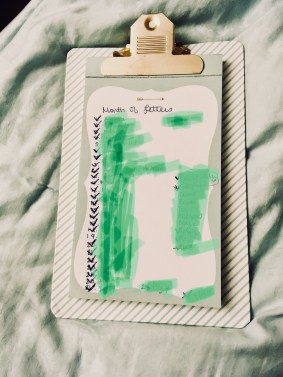
As a devout supporter of the United States Postal Service, I will similarly not stop writing letters. During February, I wrote at least one letter per day (with only 2 days off to rest my hand). The Month of Letters was not about hermit-ing and avoiding feelings; it was about reaching out and spreading love and joy. I don’t know anyone who doesn’t like getting a letter among the coupons and bills. Doubtful whether I would maintain enthusiasm the whole month, I surprised myself. It turns out I had a lot to say.

IMG_0049
List of MoL recipients; love tweets to Dan Rather not included–those hit the Twitterverse in March

I am trying. I definitely scream less. Maybe tomorrow I will even try to get to yoga.

judgment, kindness, librarians, strangers

Yes, sir / No, sir

As previously discussed, I leave just enough time in transit to get where I’m going on time. Sometimes I run close to the wire. Recently, I was on the opening shift and putting away the day’s newspapers just as the doors opened at 9AM. Two men walked in to the newspaper shelves, reached for their papers, and one walked out. One seated himself and I continued putting up the papers.

The one who took his news to go happens to wear women’s clothing and makeup.

The one who stayed in the room with me announced not quietly and with plenty of distaste, “it’s unnatural!”

I was the only other person in the room. I froze.

He had waited until the first customer left the room, so he wasn’t looking for a confrontation. Why, then? Was this statement for my benefit, somehow? Was he trying to gauge my reaction, or worse, did he assume that I agreed with him? Or, was he just THAT comfortable with airing his views wherever he pleased? And, was I willing to possibly be reprimanded for yelling at a closed-minded customer?

It was a real drag.

Never one to quip quickly or effectively in arguments, I instead simmered quietly over my ethical dilemma. I wanted to tell this dude that what is UNNATURAL is pumping enough carbon into the air that the glaciers are melting and it is 75 degrees for a week in the East Coast in February. Humans NATURALLY wore very few garments, and they were designed to protect them from the elements, not to designate gender or convey status.

Then I reflected a little.

When I started at the library, my initial reaction to the gentleman who wears women’s clothes was to judge him. I thought, “who is he kidding? He does not make a very convincing woman.” And, he really doesn’t. His frame is masculine, his wig is clearly that, and his makeup and clothing are out of style as well as more overdone than ‘en vogue’ women wear today. (I immediately noticed these things critically, which says more about me than about him. I was working three jobs, taking a full course load and was stressed and often bitter.) Then, however, I arrived at a conclusion. He dresses like a woman even though it is clear he is not one. Huh. He must just like it!

A similar revelation came when I listened to Eddie Izzard’s FANTASTIC audiobook about his life: Believe Me: A Memoir of Love, Death, and Jazz Chickens. I know I’ve raved about this book before, but here I go again. I remember Eddie’s standup by several sketches, immortalized on YouTube and burned into my mind because they portray the scenes he talks about using Lego characters. I had forgotten that he cross-dresses. When I started the book, I realized I couldn’t remember if he was gay. He addressed this, for all the similarly clueless people like me: he isn’t. He just likes women’s clothes! Huh.

Maybe this customer had also associated cross-dressing with homosexuality, but that too is a severely backward reason to judge someone. I don’t know. All I know is, I felt conflicted enough to ask my colleague what his opinion was, whether I should have said something to the rude one. His wisdom soothed me, as he thought I could do no more than to enable all customers of the library to feel safe and welcome.

Every other colleague I asked said the same thing, even one who is undergoing gender transition. Gender is a controversial topic with them, but they agreed that as employees and representatives of the library, we can’t be on the cause crusade and must make all customers feel safe and welcome, even if it makes us ill.

Of course, three hours of debating myself later, and through many iterations of “what’s it to ya?”) I thought of what I felt was the perfect, non-confrontational but I-see-you-and-your-unkind-ways response I should have said: “to each his own.”

All of us said that if we weren’t on the clock, we would have SCHOOLED him. About gender theory and human decency. Equally as much as my silence made me cringe,  librarians’ words mean a lot.

librarians, strangers

THE Library

I did not grow up with the library profession on a pedestal, and am not entirely sure when in my adult life I learned that there was a true, physical Library of Congress. My school and public libraries were great–I learned how to pronounce “subtle” when requesting Philip Pullman’s The Subtle Knife and sobbed while I finished Where the Red Fern Grows in these respective locations. It just didn’t occur to me that someone at The Top needed to decide how to categorize ALL THE BOOKS (and store them for posterity).

Many librarians treat the LoC (as it is – affectionately? – called) as our profession’s Mecca, and my experience was decidedly NOT religious.

Yes, y’all, this is the road trip alluded to in my rant against the concept of “iSchools.” The story you’ve all been waiting for!

I waffled* on whether to go on the “field trip” to tour the Library of Congress. On the one hand, I felt like I “should” go. Librarians are “supposed to” view the LoC with reverence, awe and appreciation for all the organization. Plus, I hadn’t been to Washington DC since my attendance at the Jon Stewart & Stephen Colbert Rally to Restore Sanity back in 2010, which I spent throwing up in a porta-potty, violently hungover, scaring my mom so badly she told me to go to the hospital. (I am NOT a drinker, so I shouldn’t pretend to be.) I needed to wash away that experience and replace it with something far more professional.

And yet. Lester was the one driving the minivan. And as previously discussed, Lester was, in a word, insufferable.

A glutton for punishment, I decided that a behind-the-scenes tour of the LoC would outweigh the social pain. I was not correct, BUT that little circle at the center of the photo up there has a SPIRAL STAIRCASE underneath it from the non-majestic basement and I WALKED UP IT AND EMERGED INTO THAT BIG BEAUTIFUL READING ROOM.

That was the lone highlight.

The trip started at Lester’s house, at 6am. That is never a good time to be awake, in my opinion, but I consoled myself with the thought of napping for the four hour drive.

This plan was thwarted by a full-length album by the dude who sings “Les Champs-Elysees” on FULL VOLUME. In addition to being a jerky driver, Lester was sleepy and needed energy. He turned over the driving to his poor wife after 45 minutes. She was stuck driving the rest of the way, and did not change the music for the entire FOUR HOURS. Champs-Elysees is a grand song for high school French class, but dear lord, the rest of the CD went downhill fast. This early-morning torture was THE road trip party foul of all road trip party fouls.

The return trip was even worse because it was at the end of the following day, so everyone in the car, including the chattiest person in our program who happened to sit by me after we had slept in the same hotel  room the night before, was awake and talking. And talking. And talking. And talking. About what, I have blocked out in the years since, but all I know is I had had enough of these people even before the tour of the Shakespeare Library. The conversation was the only thing I could imagine worse than the French CD. Lest you think I’m exaggerating, I have several witnesses who can back me up that on another occasion, as we tried to work on projects nearby during a class work period, this person waxed poetic for THIRTY MINUTES WITHOUT RECEIVING ANY QUESTIONS WHICH IS TO SAY WITHOUT ANY ENGAGEMENT FROM THE “CO-CONVERSATIONALISTS” about breakfast foods they did and did not like, and why. And WHY. Why???? WHY!??!?!?!

It is with people so blissfully out of touch with what conversation is that I have to question: how can someone BE so un-self-aware? I understand that people on the Autism spectrum are varying levels of incapable of “reading” social cues, and many people in the library world hover somewhere on or adjacent to the spectrum. In Lester’s case, how much of the elitism would be his “fault,” if he is or is not on the spectrum? How much is just his personality? Exactly how much can I blame him for his rudeness?

In youthful classmate’s case, when will they learn that beyond middle school, your circle of friends or the brunch table, no one cares at all whatsoever about your affinity for pancakes but deep hatred for waffles. And if they did care, they would show you by asking questions or replying in kind. (Yes, your preference is bizarre and contradictory because waffles and pancakes are the same batter, after all. Yes. We know.)

This was how I learned not to accept rides of extended periods of time from people I don’t like. It was also how I started deciding to do activities because I wanted to, not because I thought I should. Painful learning, but essential.

Road trips are better with friends, family, and audiobooks. And pancakes and waffles are BOTH my jam, IF you wanted to know. Please, tell me your thoughts on the matter!


*As I am known to do with any decision of any magnitude. Also, LOL waffled.. See what I did there?

anxiety, giving, judgment, kindness, stuff

Mission: simplify.

I consistently stare into my closet. For what I deem unhealthy amounts of time. Every day, if the door is open, I peer into it and try to acquire a new target for my not-new, but not-often-practiced skill of culling my personal possessions.

This will not sound remarkable to anyone who has lived through the four-month lease cycles of New York City, but in the 7.5 years since graduating college, I have lived in 3 different states and 8 apartments/houses. In March, I will move for the 5th time in 2 years. (Heads up, penpals.)

Moving is the absolute worst. (Melodramatically, of course.) It forces me to touch all the crap I have dragged around with me to all of these places. (I or other awesome humans who help me move the crap, that is.)

So perhaps it is a mere response to my rambling woman status, but: I need to get rid of clutter.

The symbolism isn’t lost on me, a person who suffers from anxiety. At my worst, every sentence that leaves my mouth, text or email I send, as well as statements said to/about/near me can rattle around my head for days/months/years. My mind at its worst is a pinball machine, with tiny thoughts hurling around at warp speed and maximum volume, carrying self-chastising/self-doubt/FOMO/self-analysis/self-judgment. (See a pattern?) A pinball machine where I cannot let ANY OF THE THOUGHTS go down the little chute, defending its exit.

Mind clutter is real, it is deafening and it is not healthy.

Depression is a filter, but anxiety is a magnifying mirror I hold up and see all my faults, failures and ways I don’t measure up, and I need to step away from the mirror.

So, I prune the closet. Normally, I prune the closet AND STILL feel anxious.

One of my biggest stressors is money. It would make sense, then, that since I began an almost-every-day meditation practice and committed to the decision to spend money on experiences rather than items, I have been less anxious. (And this is even BEFORE I read The Year of Less by Cait Flanders, motivational text about not spending money on non-essentials.)

Two things needed to happen: 1, I need to divest my non-essentials. 2, I need to stop stress-shopping, which is my entirely nonhelpful habit of buying clothing for the joy it will bring. Though the joy is real, it is temporary and does not mask or replace the anxiety about x, y, nor z.

Ultimately, what I need to address is a simple question. What do I actually need?

For the physical clutter: I have fewer books than any other librarian I know; I know how heavy they are to move, and I donate them. I either unsubscribe or immediately delete marketing emails. I donate clothing (using Marie Kondo as a suggestion, not a religious text), recycle papers I wrote in high school/college (and yet I still retain some, because I am a pack rat). If I can’t or don’t use it, I’m at the point where I am content with losing it. Someone else needs it more than I do.

For the mind clutter: it is cleansing getting rid of stuff, and worrying less about what to buy is freeing for both my head and my financials.

All this said, one of my 2018 resolutions was not to spend money on ‘stuff.’ January did not see any progress in that regard. February has seen a rock solid commitment thus far, though, and I feel great about paring down. I feel great about planning a trip to Italy for a friend’s wedding because I know it will be memorable and rejuvenating, delicious and beautiful, and it means quality time with people important to me.

Simplifying my life will hopefully turn this pinball machine brain into a gumball machine… Instead of all the mental noise, I’ll be able to focus on one thought-gumball at a time with mindfulness and calm and intention.

Get me out of my head/closet/apartment and into the world.
Librarian Moment/Suggested Reading:

information, judgment, kindness, librarians, strangers

What does it mean to be an “Information Professional?”

A recent trend in graduate programs for librarianship is to take out the word “librarian.” Leaving just the “ship.” Jk jk. What universities are actually doing is transitioning to “iSchools:” Information Schools (for those of you who prefer less trendy jargon). The title of the degree once was Library Science, then was Library and Information Science, and it seems now to be morphing towards just Information Science.

I, thankfully, could choose what I wanted my degree to be called. Since I don’t think “Library” is a dirty word, I named my degree Master Library [and] Information Science. My degree is almost two years old, knows its ABCs through A-L, loves avocado, and is cute as a button.

iSchool is a stupid name for a school.*

First and foremost, iSchool looks like it is trying to be an Apple product. Jump off that corporate bandwagon, universities! Though we love iPhones and iWatches and iWhateverElses, you as an institution of higher learning should be better than that!

Second, no one outside our profession understands what being a professional of information means. Libraries, yes, are changing–as are the skills librarian has, and how people are interacting with information–but leave the degree alone. If you are a database programmer, a medical/law librarian, a data manager or anything else where your relationship to information is a wrangler, organizer, streamliner or finder/retriever… you’re using those librarian skills.

Here is a TRUE, not-too-brief narrative about what I think of when I hear the term information professional:

At the orientation for our program, AKA first interaction I would have with my future classmates, representatives from library school clubs stood up and made pitches for interested parties to attend a meeting/ join their ranks. A joiner by nature, this new pool of groups to join excited me, but I didn’t know how to balance that with the questionably-less-healthy skepticism (cynicism masquerading as skepticism) also in my nature wherein I threw shade at everything and everyone in grad school on a whim. In one case, this disdain was justified.

One middle-aged career-changer began his pitch by saying, AND I QUOTE: “If you frequently find yourself the smartest person in the room, this is the club for you.”

I won’t even address the multitude of ways you could convey the same principles (intelligence, presumed love of Jeopardy) in a non-asshole series of words. But this dude had clearly thought this exact series of words in many a room. And he did not feel the need to disguise his assholeishness.

Dear reader, I wish I could say I stood up in front of the seminar room of my new peers and told him how smug and obnoxious this sounded.

In real life, however, I did not call him out on this ridiculousness. My mouth gaped open for far too long, in disbelief. After all, I was in the same room with him right now; did this man therefore believe he was smarter than everyone else?

In a practiced and particular mode of Librarian Acceptance (which I do not yet possess), however, this was more or less waved away with a “well, that’s Lester** for ya.”

Unclear whether anyone joined his club, nor whether they did so because of this statement or in spite of it.

Lester’s business cards probably identify him as an “Information Professional.”

In my [the real] world, I try to avoid thinking I am better than other people because I am smart. (Note: this has become increasingly hard since November 2016. But, I would argue that the prominent draw pulling many people toward political views diametrically opposed to mine is actually the lack of empathy, rather than intelligence–or a combination of the two.)

At any rate, I know I did next to nothing to earn the gift of my brain, though I appreciate and constantly try to stimulate and expand it. I try to withhold judgment and act with empathy and genuine (not condescending) kindness.

Because there have been plenty enough times where I have a migraine and stutter my words, or can’t make a decision whether to buy the proposed reusable bag at checkout, or just generally act uncomfortable and awkward around people I don’t know. Some people judge and condescend, and some are patient and don’t look for ways to look down on people. I aim to be the former, but occasionally I don’t catch my skeptic instincts in time.

All I’m saying is call a spade a spade, call a library degree a library degree, and don’t call yourself a [very stable] genius!


*I don’t mean ‘stupid’ in a lacking intelligence way…. I apologize to the Political Correctness police, and acknowledge that this is slang and suggests I act in the direct opposite way of what I claim in this blog. I just mean it’s trendy and tedious and silly, not what universities should be about.

**Lester is not his real name. He will likely show up in a future blog for his role in the worst road trip of my life.

anxiety, books, librarians

Shhhh!!!!

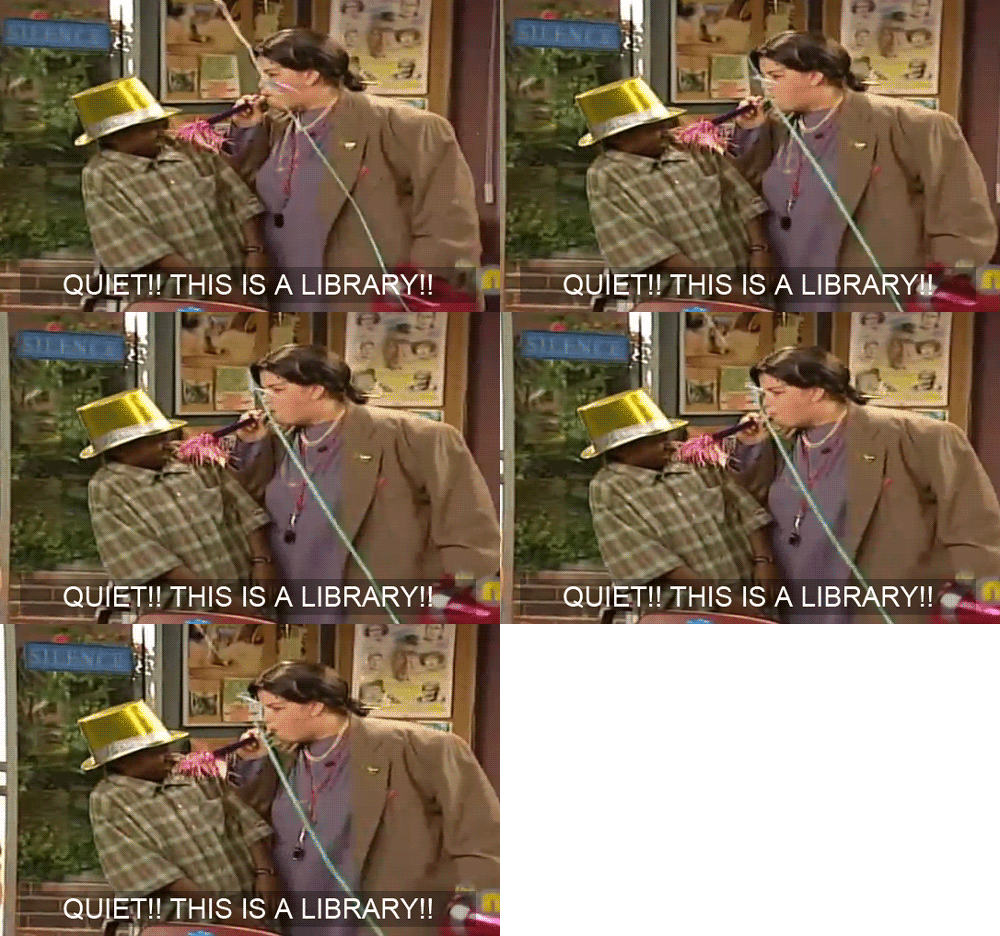
The 90’s preteen version of the much more profane Saturday Night Live was called All That. Mary Beth Denberg was never my favorite part of that show, but as an adult and a library employee, I have come to love her. Her character consistently screamed, “QUIET!! THIS IS A LIBRARY!!” at people who were not making much noise. (This targeting of the innocent may have something to do with the general fear/distrust of librarians I wrote about in my last post.) She also ran blenders, vacuum cleaners and was a loud phone talker, the worst offender of her own rules.

We were taught in library school not to shush. One school-library instructor was particularly passionate about this: we ought to expand our definition of libraries as silent spaces, and to go out and preach the gospel of libraries as active, vibrant, sometimes loud spaces of learning and discovery.

People still get pissed when it’s too loud.

My response to volume depends entirely on my irritability level at that precise moment, and how angry the customer is who brings it to my attention. Sometimes I cringe, feeling like a restrictive perpetuator of the ‘shushing librarian’ stereotype. Sometimes, people truly are being disruptive and inconsiderate of their neighbors. That category of people responds by: either immediately acknowledging wrongdoing and apologizing or glaring at me and rolling their eyes, resuming the behavior immediately after I leave. The rude ones are my targets and I make sure to pop in multiple times. Part of being in a public library is knowing it is a communal, shared space, and no one group of people owns it–even the librarians! But, like, we are the closest to that so you should listen to us.

I feel lucky to work in a busy, popular, community-centered public library. Sometimes I even like when it is loud there. You know what ISN’T loud? An empty building. Volume means there are people utilizing the space in many various ways, and there are designated silent work spaces for those who visit the library because literally nowhere else in their lives is quiet enough for them to focus.

All that said, my other job at a university library can feel like a time warp. The third floor is dedicated to silent study, and was built at a time when this was the only way people used the library. There is no carpet, no soundproofing, and ANY sound travels in a maddening way. The kids who work up there are the self-isolating, serious students who either need to get serious studying done.. Or they’re the kids who couldn’t find seating on the second floor and will proceed to chatter and get death glares. Students will frequently make phone calls down to the staff and, whispering, ask them to make an announcement reminding their neighbors they should not be speaking.

And I have had the great fortune that my current ongoing project has been to take a label gun (like a stockperson in a grocery store uses to price items) to a selection of 45,000 books.

I want to shush myself.

Let this writing serve as my apology and penance to all the kids who are genuinely confused and almost immediately enraged at the squeaking and click! sound of the gun stamping the labels and pushing them forward, and the tap! when I touch the label to each book. I was never able to study listening to music, but the kids these days can… And I’m thankful for that, because if I heard this repetitive, annoying noise when I was studying, I would have steamed until it was done (possibly an hour at a stretch) and lost all productivity because I would have repeatedly had a conversation with myself saying, “leave, jackass! Go study somewhere else! This is so annoying and it will never stop!” and then talking myself out of it.

Miraculously, I have only had 2 students actually approach to determine what I am doing. I have apologized to several when I am nearby and see they don’t have headphones, and they wave me off, saying it’s okay. Surely they are international students, because their humility and lack of entitlement was startling in its non-American-ness. The non-confrontational tendencies of the students I’ve encountered do not stop my anxiety from causing me major distress. I keep waiting for one of them to snap, take my sticker gun and bash me over the head with it repeatedly. I find myself holding my breath, listening on high alert for the approach of hostile college students.

But, the project is almost done and I haven’t been beaten or verbally abused yet, and there is even carpet in the plans for redesign!

Now all we need is some updated furniture and we will be good to go! That should be easy, right?

coworkers, librarians

Librarians as Control Freaks

My friend is a 20-something living his best life and paying down his student loans. He loves expanding his mind, doesn’t want to spending money on books, lives around the block from the public library, AND YET, he still does not have a card. This makes me angry.

Upon further probing (aka nagging), he asks, “What is the checkout process like?”

I dial back, wait a second, realizing there is more to this story than laziness. I then say, “what do you mean?” (This is simply the best non-reaction question, and I recommend it to people like me who tend to react by jumping down peoples’ throats when I hear something I don’t like. It stalls, keeps the other person talking, and gets you more specific information so you can proceed more calmly.)

He went on to describe the checkout process at his high school library as tedious, complicated and stressful, under the watchful/psychotic eye of his high school librarian.

“Yeah, the public library isn’t like that. You just take your book and your card up to the person at the desk, and she tells you the due date and to have a great day.”

He was relieved. Huh. Was this “library police” myth real after all? I thought my dad was the only one who had this recurring dream, but it turns out some librarians scare people away. To empathize with the librarian, many school library budgets are THIN to non-existent and librarians want to focus on keeping the materials they already have so they can spend their money on new materials. This avoiding paying for replacements might manifest in making the process overly complicated, or putting the fear of God into the kids.

Some librarians are mean. The vast majority, though, are–and this may come as a surprise–kind, thoughtful control freaks.

When I joined the profession, I knew I liked to catalog things in such a way that I could find them, but it didn’t click that all people I work with would also like order, occasionally to an unhealthy level.

Suffice to say, I learned. I learned when I received an email from a colleague indicating that I “should not have moved some papers out of a binder,” when I had set them 1 centimeter away, Directly beneath said binder because the little flap holding said papers was tearing from overuse. (Save the flap! Vive la binder!)

I learned when someone stood over my shoulder, watching me pack books to mail and asked me in the same tone as you would ask a child to tell you the next step in tying her shoes, “and where are you sending it?” following my (correct) response with, “and how will you label it?” ………. Ma’am, I’m a grown woman. One who understands the concept of mail. I see you with your bazillions of pre-printed labels, ready-to-stick.

I picked the correct one (because it wasn’t hard) while wondering why, since her assumption was that I was going to do it wrong, she chose to treat me in so condescending a manner rather than just remind me or ask me if I remembered where to find the labels.

And then, because I’m passive-aggressive, maybe not unlike the email-writer, I’m writing this instead of Directly confronting the issue.

To my boyfriend, I seem maniacal and obsessive-compulsive with putting household items “where they go.” In the library circle, I am one of the more laid back ones, because I do not hold procedure or organization as the highest priority. (GASP! Library foul!) That #1 honor goes to the humans and my relationships with them; no one likes a rude coworker! So unnecessary.

I know there are people like this in all lines of work, at all rungs on the career ladder, who like to make other people feel small in order to feel more important or smarter.

Kind librarians do not do this. While we’re at it, please know that librarians are MUCH more than control freaks. When applied humanely, this is an asset rather than a vice, because it means we know where to find what you need. Librarians have superpowers. We are generalists, we are eye-openers, community builders, granters of access, innovators and teachers.

But if you want to see us lose our shit, hide something we are planning on using in the next few hours.

bookmess
Librarians may twitch until they are allowed to organize this.
anxiety, books, career

This One’s for My Girls

I had planned to write some furious paragraphs about Drumpf’s derogatory comments about brown countries, but I waited more than 24 hours and watched tons of personal stories (Anderson Cooper’s was particularly moving, as was Don Lemon’s) and reflections and jokes about how rude, racist and smugly rich he is. I’ve worked through my rage. He is an embarrassment to our country, and I am actually grateful that he is taking the GOP down in flames with him/drawing a line in the sand for elected officials to actually choose to be decent to and on behalf of their constituents. I have to believe that decency will win, in 2018 and in the long run.

But this political outrage/irritant is only one of many sources of anxiety. The outside world is nothing compared to the echo chamber of an anxiety-riddled brain. My friends and I constantly discuss the myriad ways that we question ourselves, our decisions and our progress in the adult world.

Last night, I went to dinner with three of my dearest friends, one of whom is moving out of state this week. She’s taking a risk, acknowledging that her part-time position won’t be enough to live on & knowing she will within the next few months need to find another part-time job, possibly a full-time job, as well as an apartment that is affordable and safe and not miserable for commuting in January. This is not the worst idea ever. She and her boyfriend will be living in the same city again. This is not the riskiest idea ever. She taught English in Japan for two years, venturing there without speaking more than a few sentences of Japanese. She is highly qualified, professional, thoughtful, organized, responsible and bilingual. (Yes, I know, show-don’t-tell, but I don’t want to violate her privacy.)

And yet, she is terrified at the weight of this decision.

As are all of my friends. About who they’re dating or the lack thereof, about how often they cry or don’t, about whether to buy a house, whether they bought the wrong one, about their rent, their income, their careers, their kids or lack thereof..

And yet. As with many other instances of my sweeping generalizations, upon further reflection, I know that is not true. I have many girlfriends (and more acquaintances, so maybe this also has something to do with how much more vulnerability you share with your closest friends) who are sure of themselves. They are not calm 100% of the time, but they are stable enough not to fly off the handles upon an unplanned event, a depressing news story. They are not entirely derailed or roadblocked by doubt every time they need to make an adult decision.

This is my goal. Closer to unflappable. Bold. Confident in my purpose. Kind to myself and less critical of others.

Here are some books that have empowered me to me move towards this:


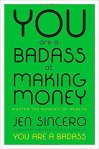
About finances and how they generally work out if you take control of spending: You Are a Badass at Making Money by Jen Sincero

About relationships and what to accept/expect/let go: What French Women Know by Debra Ollivier

About caring less about what other people think: The Subtle Art of Not Giving a F*ck by Mark Manson

About how to clear my head/raise future children: Last Child in the Woods by Richard Louv

About social anxiety and how I am definitely not the only one who suffers from it, and also just a pleasant reminder that comics are great: Adulthood is a Myth by Sarah Andersen

About how to be a person: The Power of Meaning: Crafting a Life That Matters by Emily Esfahani Smith

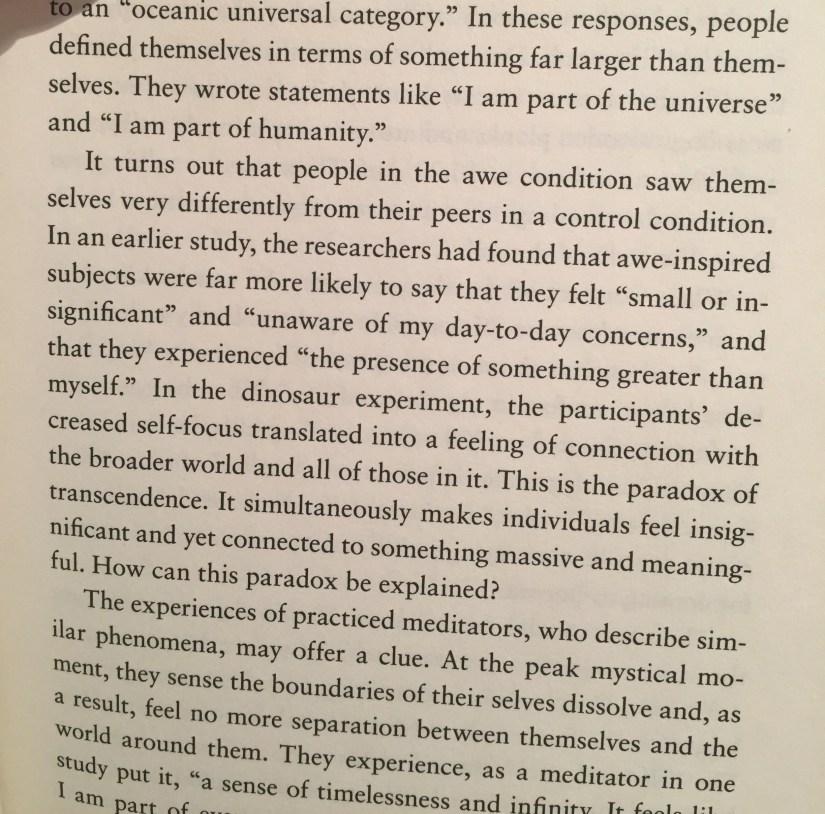
  • Everyone should read this book. This is my favorite excerpt, talking about a study that asked people to answer the question “Who are you?” after either staring up from the base of a tree or at a nondescript building.

img_2434.jpg

The world is huge, and awe-inspiring! (Just ask Neil DeGrasse Tyson.) Perspective is important, as is getting out of my head enough to realize my problems are often not as catastrophic as they appear between my ears. In fact, thinking that they are just might inhibit me from behaving well towards others, and letting fear drive me absolutely blocks me from growing or changing, taking any risks at all.

My friend will be fine. She and this move may even be great. She will carry her support network with her and find a community of coworkers and explore a new city. Like me, she has to quiet the peanut gallery of doubts and welcome opportunity. Read before bed instead of scrolling through articles on her phone. It’s not okay.. yet. But who says it won’t be soon?